





Coenzyme Q10 For Fertility
In contemporary society, fertility problems are troubling more and more families. In the search for safe and effective fertility aids, coenzyme Q10, a substance naturally present in human cells, is receiving increasing attention. It is not only crucial for energy production but also a powerful Antioxidant. Does it truly help with fertility? Today, we'll provide a comprehensive analysis of the close relationship betweencoenzyme Q10 and fertility.
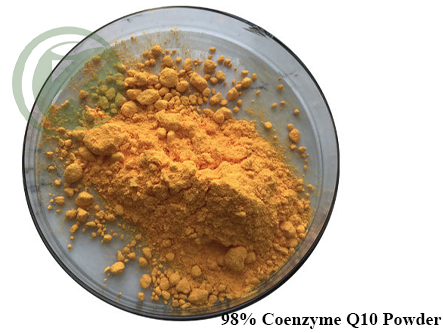
Kintainutri® is a manufacturer of Coenzyme Q10, we provide global customers with 98% oxidized Coenzyme Q10 (oil-soluble) and 10% water-soluble Coenzyme Q10 powder. Welcome to contact us for the best price.
Is coenzyme q10 good for fertility?
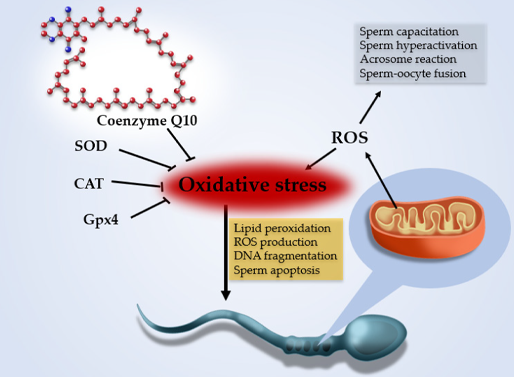
The answer is yes, current scientific evidence strongly supports the positive impact of coenzyme Q10 on reproductive health. Its core mechanism lies in combating oxidative stress. Oxidative stress is a state of imbalance between free radicals and antioxidants in the body, leading to cell damage. In the reproductive system, eggs, sperm, and embryos are particularly vulnerable to oxidative damage, which directly affects their quality, DNA integrity, and the chances of a successful pregnancy.
Coenzyme Q10 functions primarily in two ways: first, as a crucial component of mitochondrial energy production, it provides ample "power" for reproductive cells (eggs and sperm); second, as a powerful antioxidant, it protects these delicate cells from free radical damage. Therefore, whether for women's ovarian function and egg quality, or men's sperm parameters and DNA integrity, coenzyme Q10 supplementation has been shown to be a potentially beneficial adjunctive strategy.
Benefits of coenzyme q10 for fertility
Coenzyme Q10 benefits for women
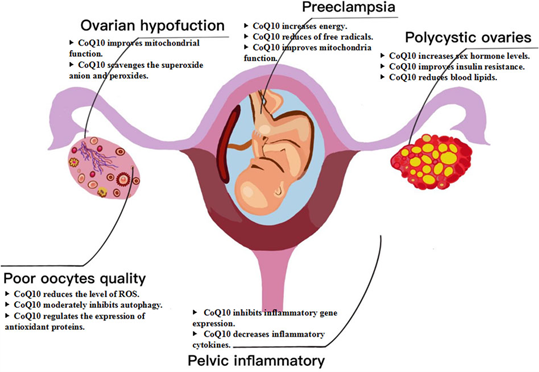
In the field of coenzyme Q10 and female fertility, studies have shown that it has clear benefits for young women with declining ovarian reserve or poor response to ovulation induction. It can improve ovarian responsiveness to drugs, reduce the hormone dosage required for ovulation induction, increase the number of oocytes retrieved, and significantly improve fertilization rate and the number of high-quality embryos by enhancing mitochondrial function in oocytes. In addition, its antioxidant properties help regulate oxidative stress in the body and protect ovarian tissue. A clinical trial in young women with low prognosis found that daily supplementation with 600 mg of coenzyme Q10 could bring about the above-mentioned improvements. Although the increase in pregnancy rate and live birth rate was not statistically significant due to the limited sample size, it has shown its potential in improving egg and embryo quality.
Coenzyme Q10 benefits for men
Coenzyme Q10 plays an equally essential role in male fertility. It can directly improve sperm parameters. Multiple studies have confirmed that supplementing with coenzyme Q10 can significantly increase sperm concentration, total motility, and progressive motility, while also improving sperm morphology. More importantly, it can reduce sperm DNA fragmentation rate (SDF). Oxidative stress is a major cause of sperm DNA damage, and the antioxidant effect of coenzyme Q10 can effectively reduce this damage and improve sperm fertilization ability. In addition, coenzyme Q10 can enhance the total antioxidant capacity in semen, regulate reproductive hormone levels, and provide a good physiological environment for sperm production and maturation. It is an important auxiliary means to improve male infertility, especially idiopathic oligoasthenospermia.
How much coenzyme q10 should i take for fertility
The recommended dosage of coenzyme q10 for fertility needs to be adjusted according to individual circumstances. Currently, the clinically recommended dosage has a clear reference range.
For women, the commonly used dosage in studies investigating improvements in ovarian response and oocyte quality is between 180 mg and 600 mg daily. For example, a study that significantly improved IVF outcomes in women with low ovarian reserve used a regimen of 600 mg daily (divided into three 200 mg doses) for two months. Another study in women with polycystic ovary syndrome used a dosage of 180 mg daily. For men, the recommended dose to improve sperm quality is 200-400 mg daily, which can be taken once or in two divided doses. A cycle of supplementation is 3-6 months, because the sperm production cycle is about 90 days, and only long-term regular supplementation can show obvious effects.
It is important to note that higher dosage is not necessarily better. It should be used under the guidance of a doctor or nutritionist to avoid overdose caused by combining it with other antioxidant supplements. The dosage plan should also be adjusted according to your own health condition.
Where to buy CoQ10 Coenzyme Q10 Powder for fertility?
When choosing a coenzyme Q10 product for fertility support, product purity and stability are paramount. With numerous brands on the market, finding a focused and reliable supplier is key.
Kintainutri® employs advanced microbial fermentation technology and multiple purification processes to ensure high levels of active ingredients and superior bioavailability in its products. We have established a comprehensive quality control system, strictly adhering to international production standards, thereby providing downstream brand owners and quality-conscious consumers with a safe, efficient, and reliable choice.
To buy bulk Coenzyme Q10 powder, please feel free to contact us at natural@kintaibio.com.